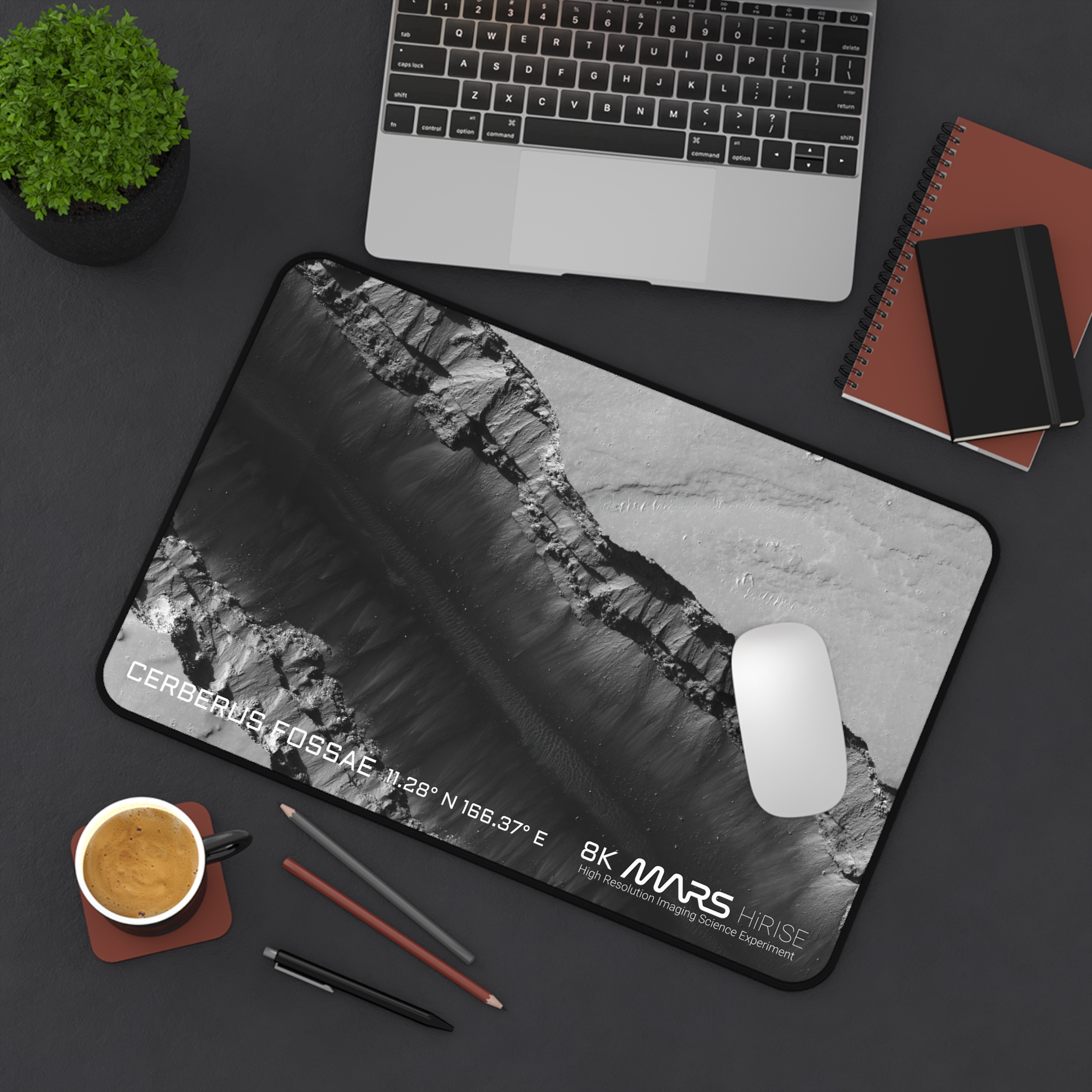
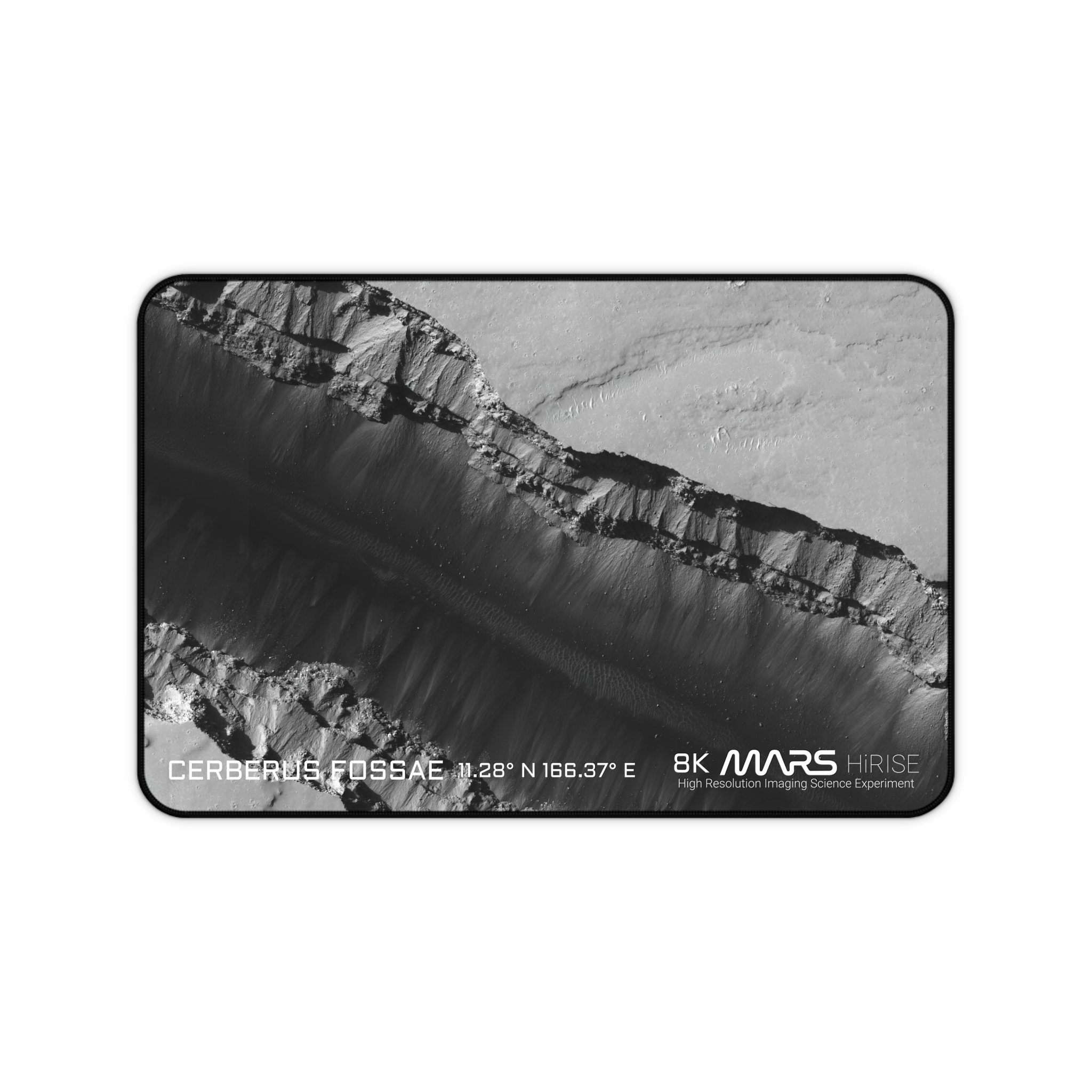
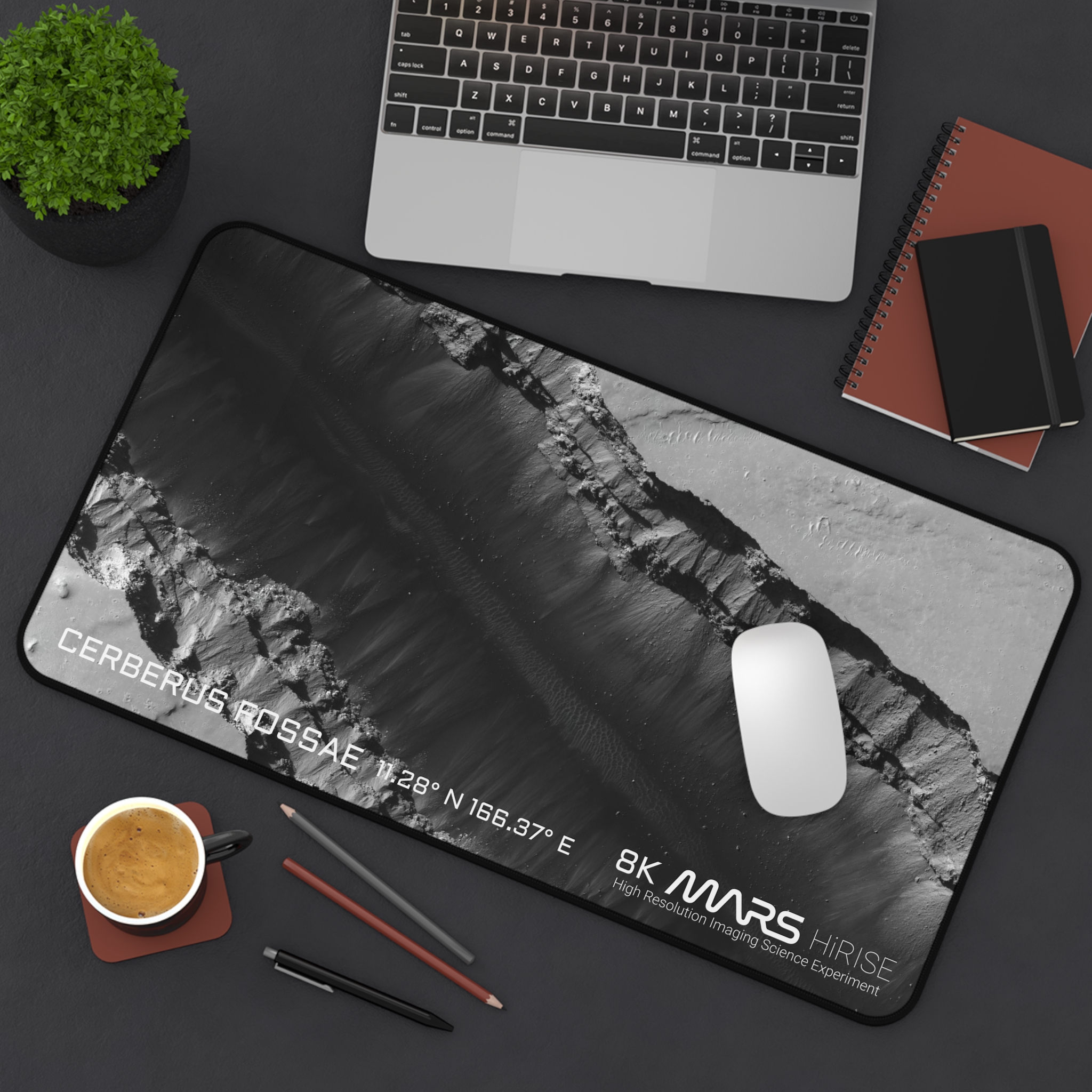
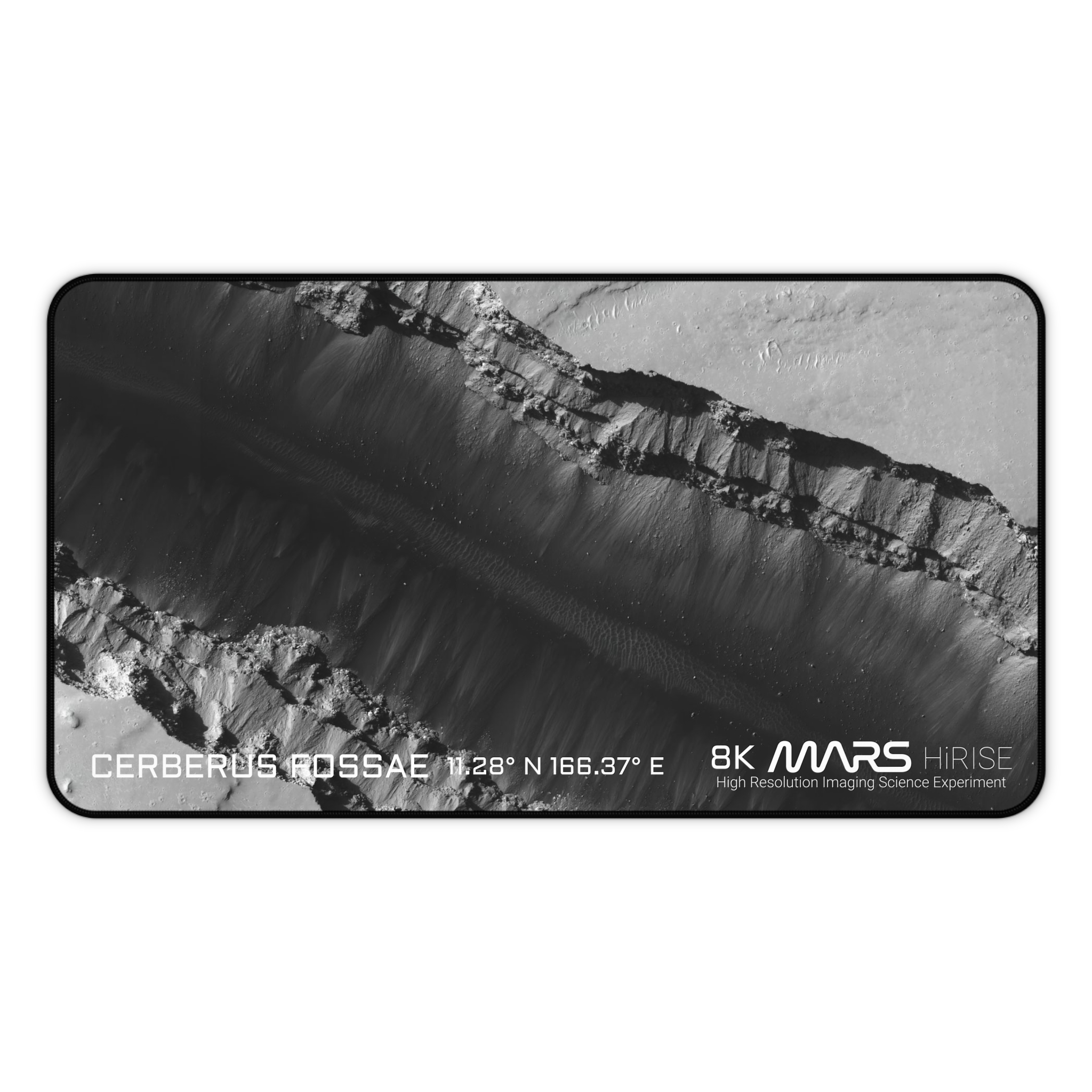
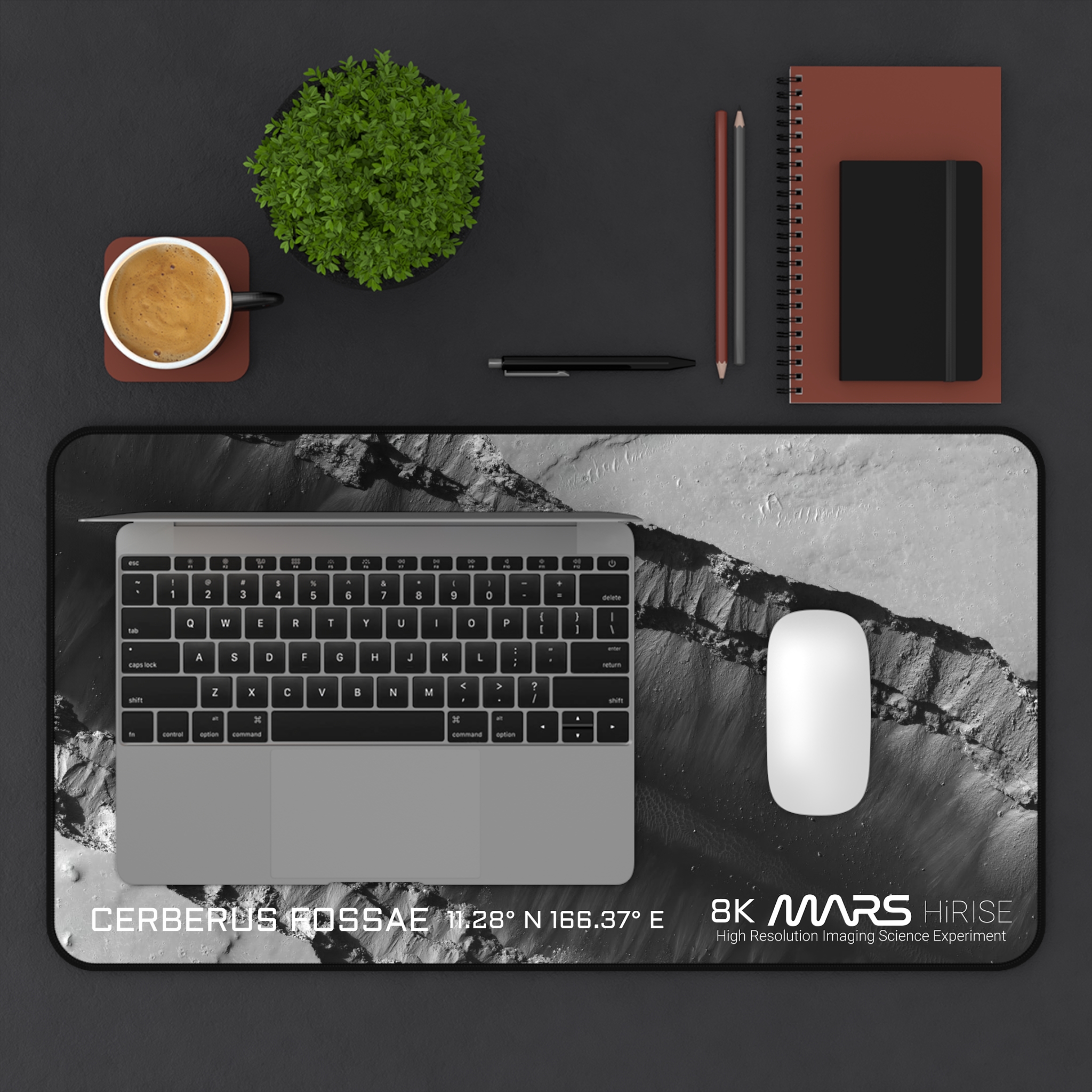
The Cerberus Fossae are a series of semi-parallel fissures on Mars formed by faults which pulled the crust apart in the Cerberus region. They are 1235 km across and centered at 11.28 °N and 166.37 °E. Ripples seen at the bottom of the faults are sand blown by the wind. Numerical modeling of the forces in the crust of Mars suggest that the underlying cause for the faulting is the deformation caused by the Tharsis volcanoes to the east. The formation of the fossae was suspected to have released pressurized underground water, previously confined by the cryosphere, leading to the creation of the Athabasca Valles.
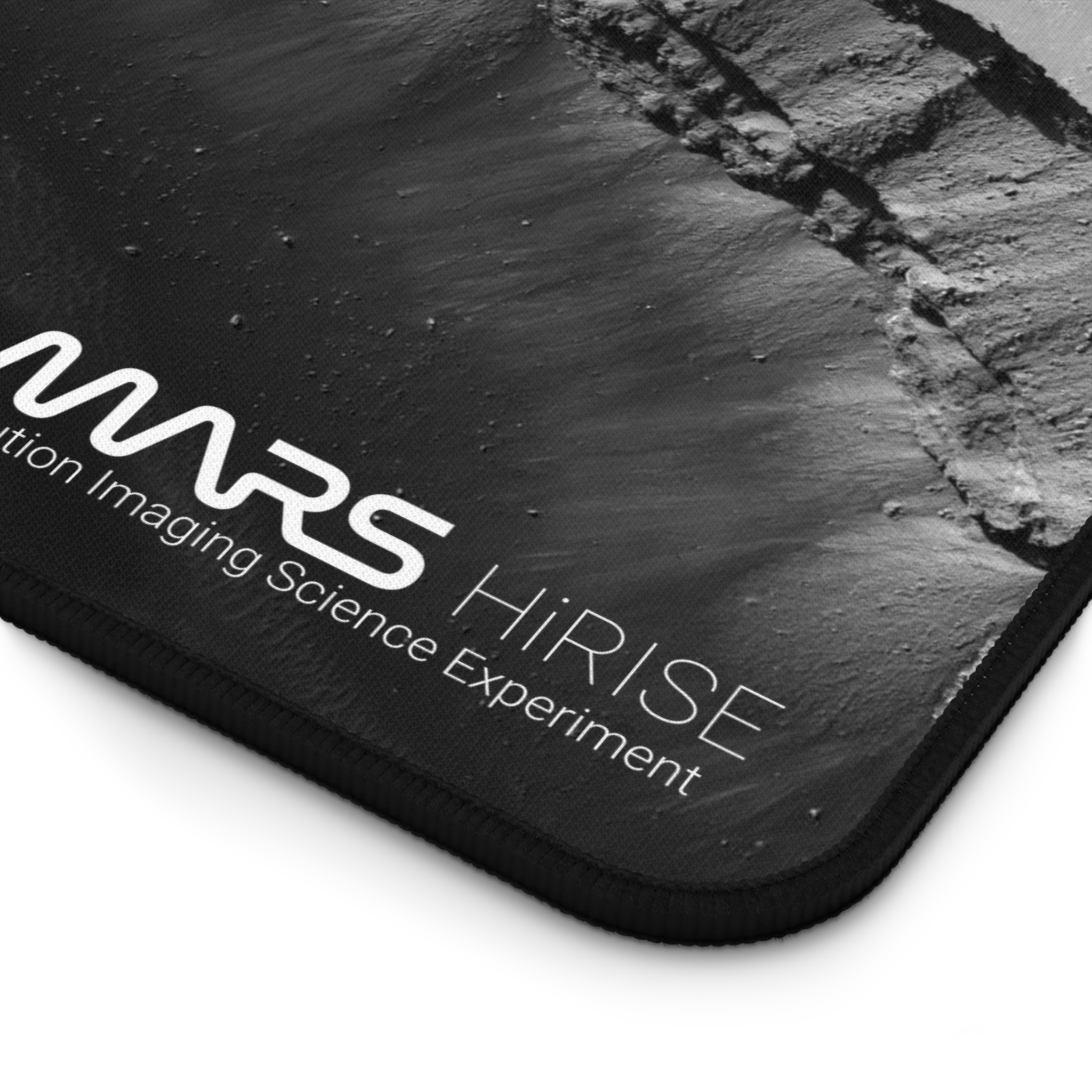
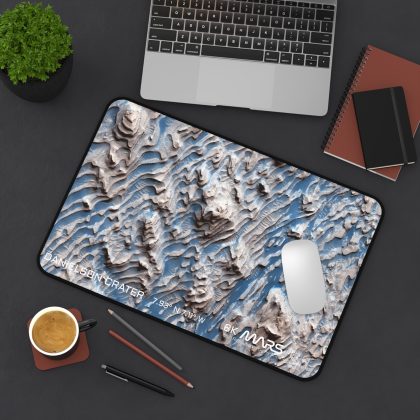
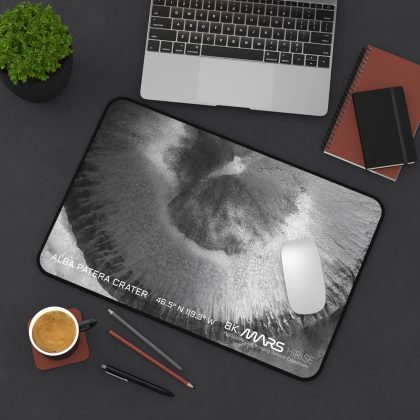
8K image from HiRISE (High Resolution Imaging Science Experiment) onboard the Mars Reconnaissance Orbiter, NASA. HiRISE is the most powerful camera ever sent to another planet, letting us see the surface of Mars at 30 cm/pixel. That means we could probably see your shadow from over 200-300 km above.
Martian Internet utlises Topaz Labs AI based tools to upscale the image for high quality printing at 300dpi. Topaz Labs neural networks are continuously trained on a wide variety of sample images to understand how photorealistic detail looks. After learning from millions of images, the AI image upscaler can now believably increase resolution on a wide variety of different subjects and image types. The results are often magical. A final pass is made with Sharpen AI and Denoise AI to ensure every detail is as clear as possible and free from blur and grain. We meticulously scour the image by eye to ensure that interpolation is smooth and there are no artefacts.
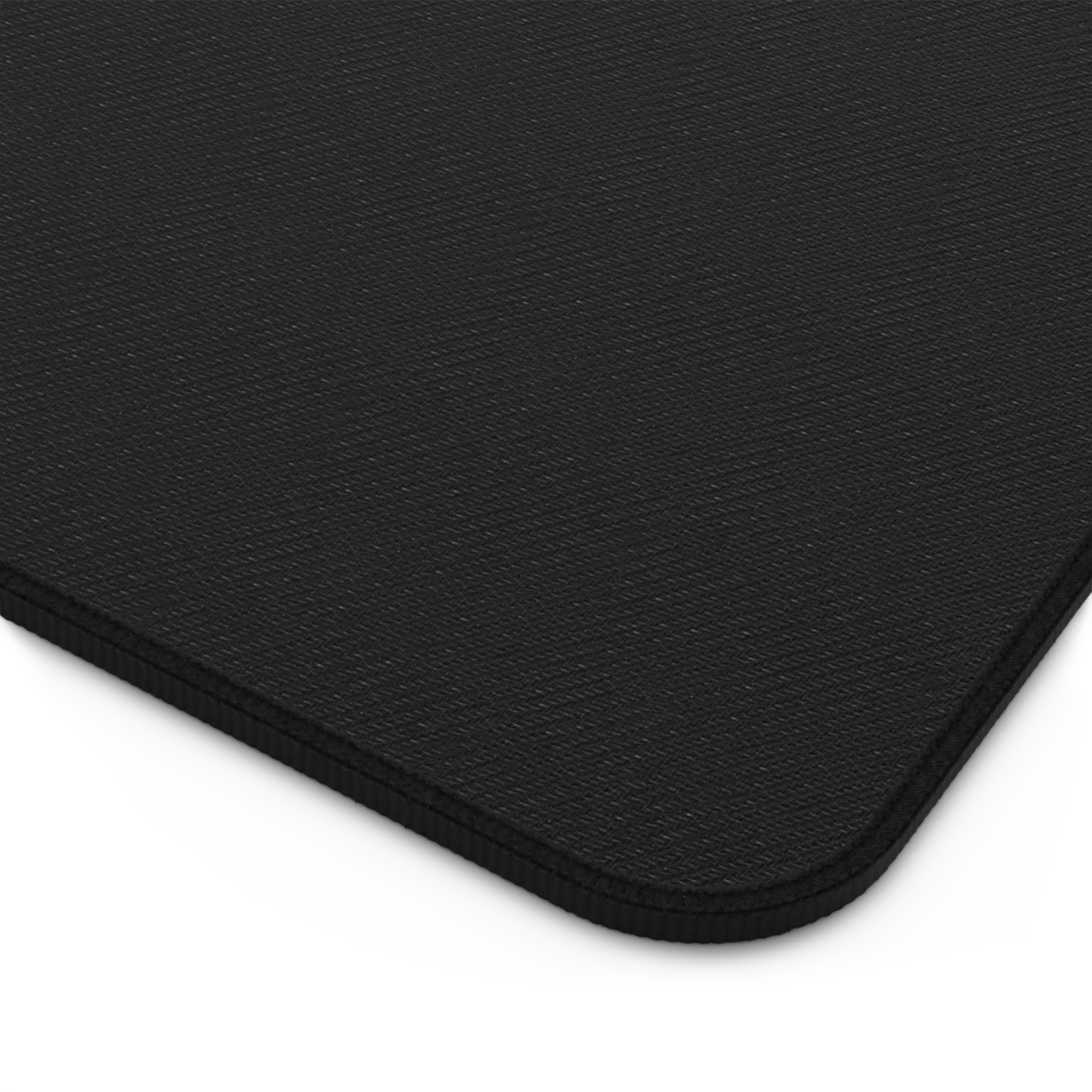
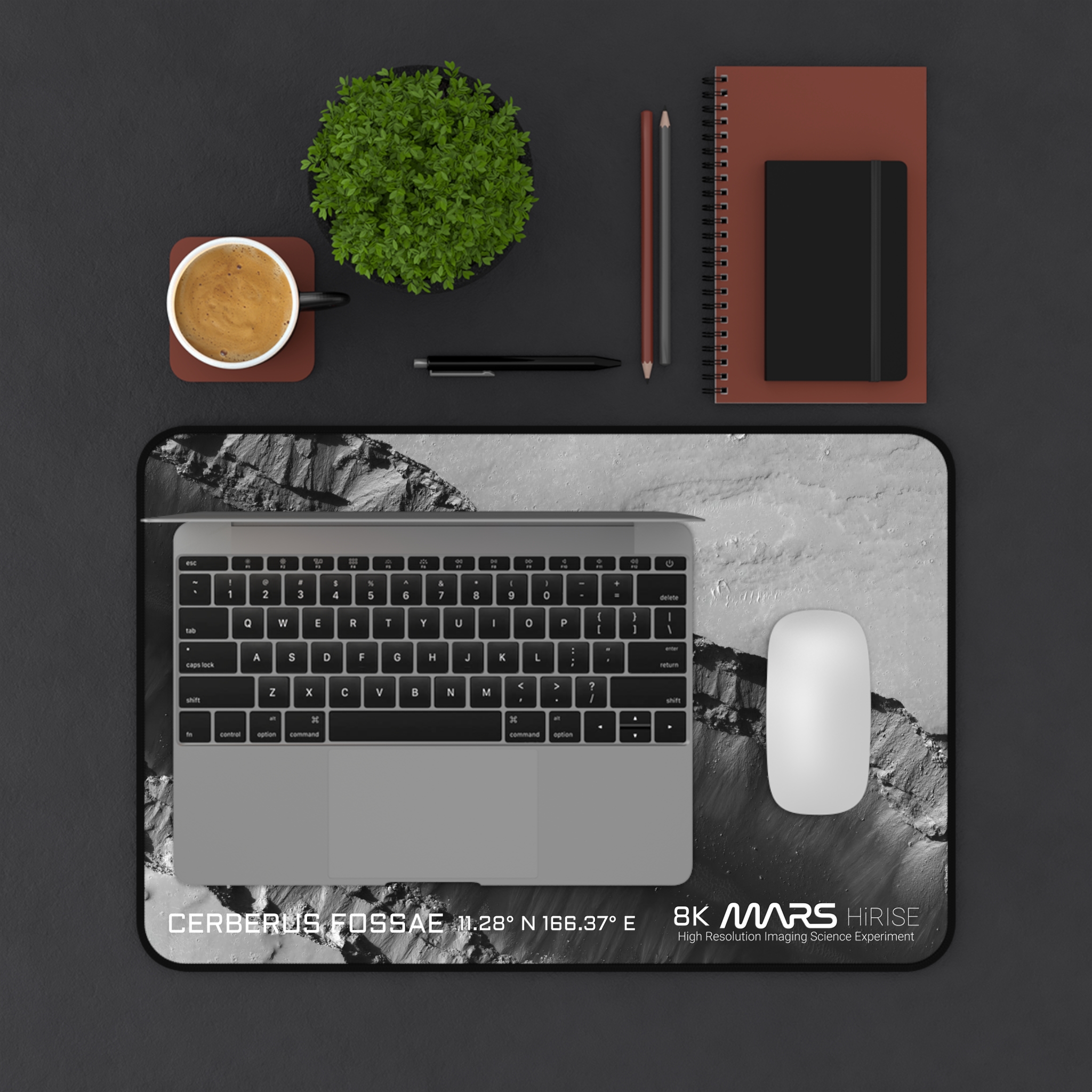
Made of 4mm thick neoprene material, this desk mat has an anti-slip backing and a hemmed edge for durability and stability. A supportive surface for writing, typing or crafting.
.: 4 mm thick neoprene
.: Anti-slip backing
.: Full print
.: Multifunctional use
Image Credit: NASA/JPL-Caltech
Design: © 2022 Martian Internet.
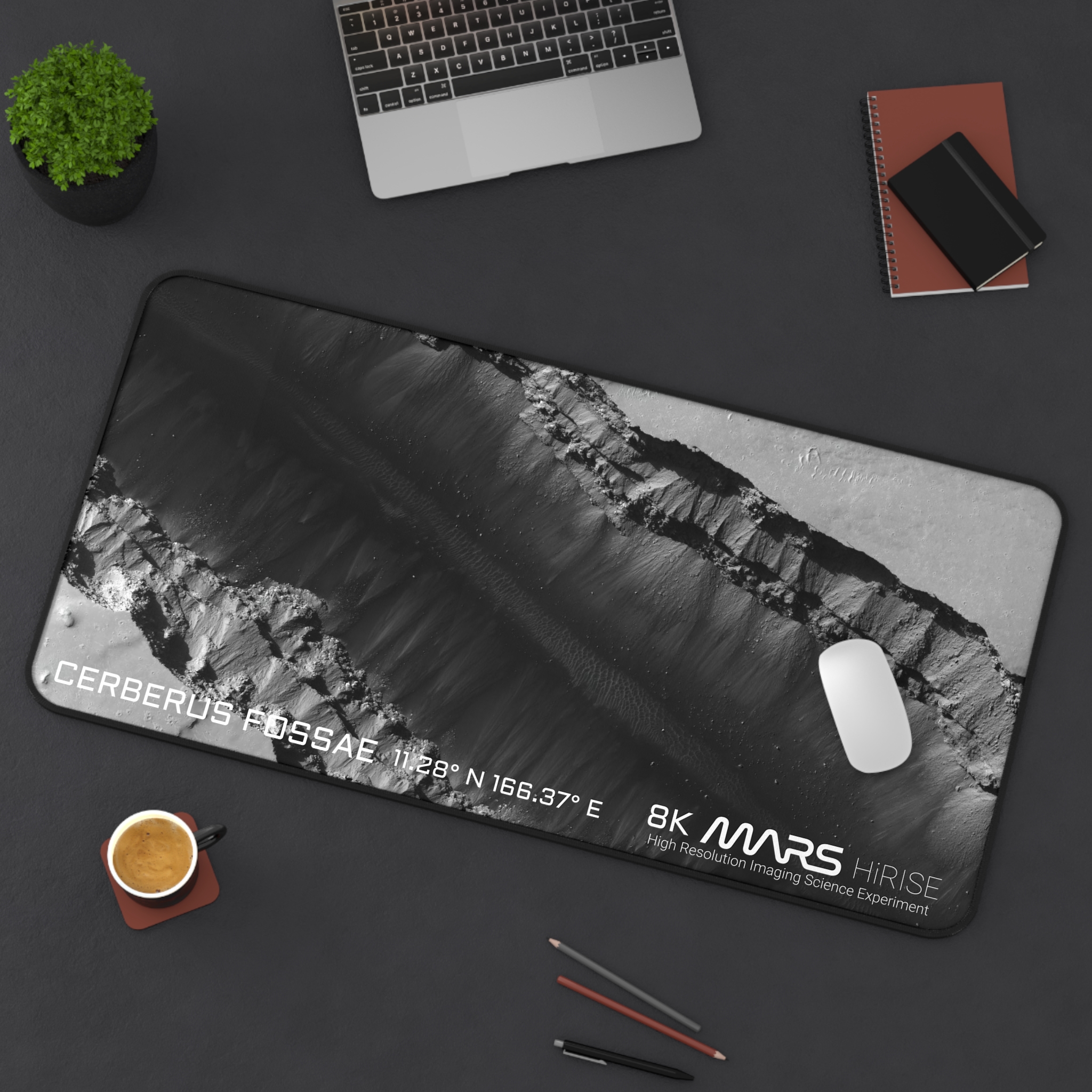
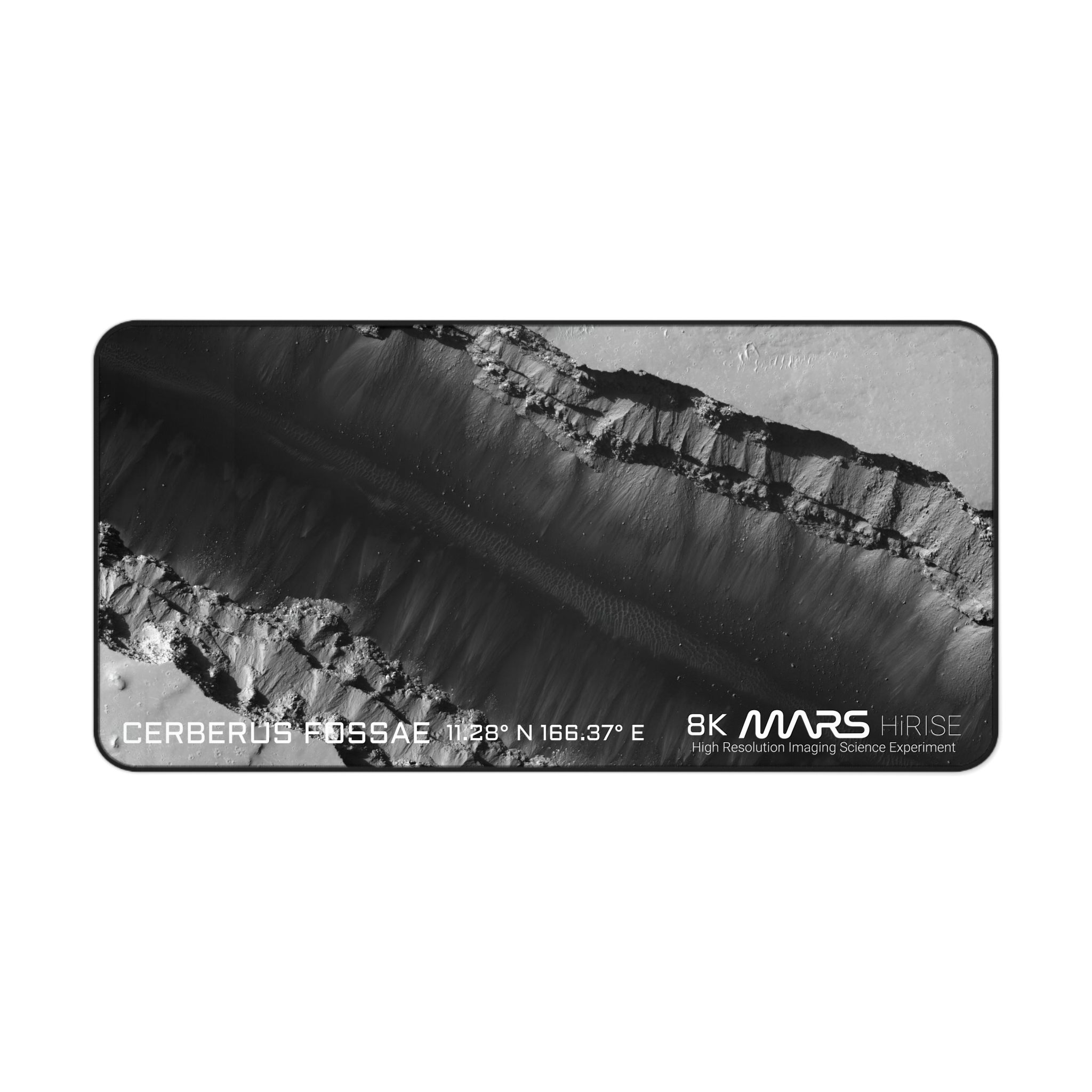
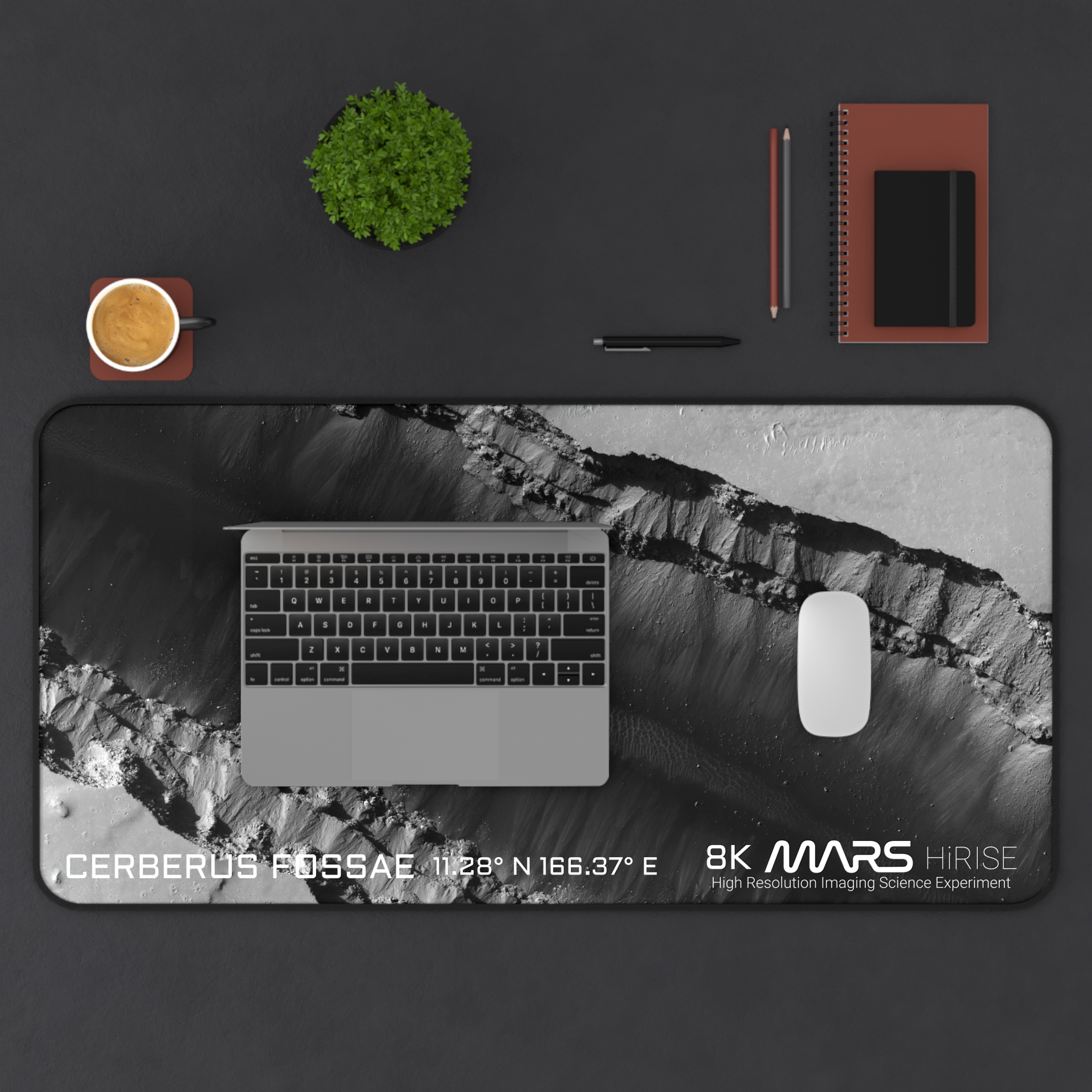
Cerberus Fossae Desk Mat / 8K Mars HiRise Satellite Image / NASA Mars Mission
Price range: $26.99 through $42.99
| Weight | N/A |
|---|
Reviews
There are no reviews yet.